Admin
Admin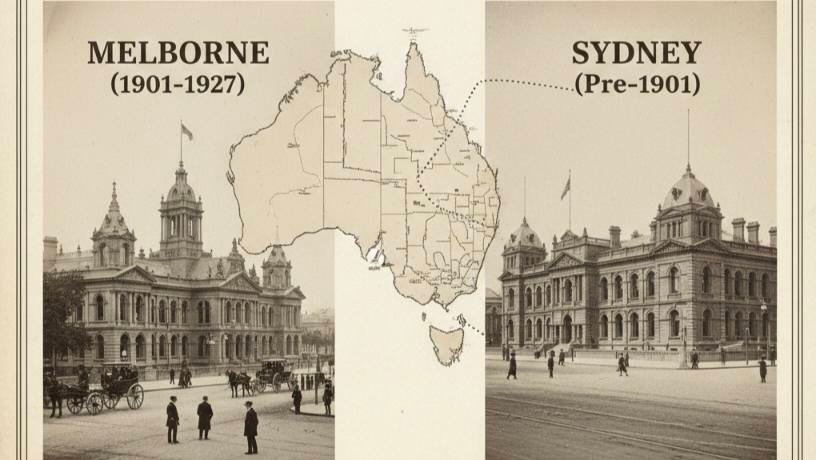
Australia’s journey toward establishing a permanent capital city is closely tied to its early federation years and political compromise. Before Canberra was officially chosen and developed, the country relied on other major cities to serve as the seat of government. Understanding australia’s capital city before canberra helps explain how geography, rivalry, and national identity shaped Australia’s political foundations. This article explores that transition in a clear, human way, connecting historical facts with the broader story of a growing nation.
Australia Before a Permanent Capital
When Australia federated in 1901, it became a unified nation, but one major question remained unanswered: where should the capital be located?
Federation and early challenges
At the time of federation, Australia consisted of former British colonies that had grown independently. Each colony had its own priorities, infrastructure, and sense of importance, which made choosing a neutral capital city difficult.
Why the capital question mattered
The capital was not just an administrative center; it symbolized unity and national balance. This is why debates surrounding australia’s capital city before canberra were intense and deeply political.
Sydney’s Early Role in Governance
Sydney, as the oldest and most established city, naturally played a role in Australia’s early political life.
Political activity in New South Wales
Sydney was Australia’s largest city at the time of federation. Its existing government buildings and infrastructure made it a practical location for early parliamentary functions.
Why Sydney was not chosen permanently
Despite its size and influence, Sydney faced opposition from other states, particularly Victoria. Many leaders feared that selecting Sydney would give New South Wales too much power within the federation.
Melbourne as the Temporary Capital
To resolve the dispute, a compromise was reached, allowing another city to host the federal government temporarily.
The compromise decision
Melbourne was selected as the temporary seat of government in 1901. This decision helped ease tensions while plans for a new capital were developed.
Life as the interim capital
For over two decades, Melbourne hosted Parliament, government offices, and political events. During this period, the city effectively represented australia’s capital city before canberra, even though it was never intended to hold that role permanently.
The Search for a Neutral Capital Location
The Australian Constitution required that the permanent capital be located in New South Wales but at least 100 miles away from Sydney.
Choosing a neutral site
This requirement aimed to balance power between rival states. After surveying multiple locations, lawmakers sought a site that offered neutrality, room for development, and a fresh national identity.
Planning a purpose-built city
Unlike existing cities, the future capital would be designed specifically for governance. This long planning phase marked the transition away from australia’s capital city before canberra toward a new political era.
Canberra’s Emergence as the Capital
After years of planning and construction, Australia’s purpose-built capital finally came into existence.
From idea to reality
Canberra was officially named the capital in 1913, though Parliament did not move there until 1927. The city was designed to reflect order, balance, and national unity.
Ending the temporary arrangement
With the relocation of Parliament, Melbourne’s role as a temporary capital ended. This marked the conclusion of the long chapter defined by australia’s capital city before canberra and the beginning of a permanent political home.
Frequently Asked Questions
What was Australia’s capital before Canberra?
Melbourne served as the temporary capital from 1901 to 1927.
Why wasn’t Sydney chosen as the capital?
Other states opposed Sydney due to concerns about imbalance of power.
How long was Melbourne the capital?
Melbourne hosted the federal government for about 26 years.
Why was Canberra built from scratch?
A purpose-built city ensured neutrality and allowed long-term planning.
When did Parliament move to Canberra?
The federal Parliament officially moved in 1927.
Conclusion
Australia’s path to establishing a permanent capital reflects compromise, foresight, and national unity. While Melbourne functioned as the practical solution during the early years of federation, it was never meant to be permanent. Exploring australia’s capital city before canberra reveals how political balance and regional fairness shaped one of the country’s most important decisions. Today, Canberra stands as a reminder that thoughtful planning can turn disagreement into lasting national identity.